Call now
908-527-7926

Call now
908-527-7926
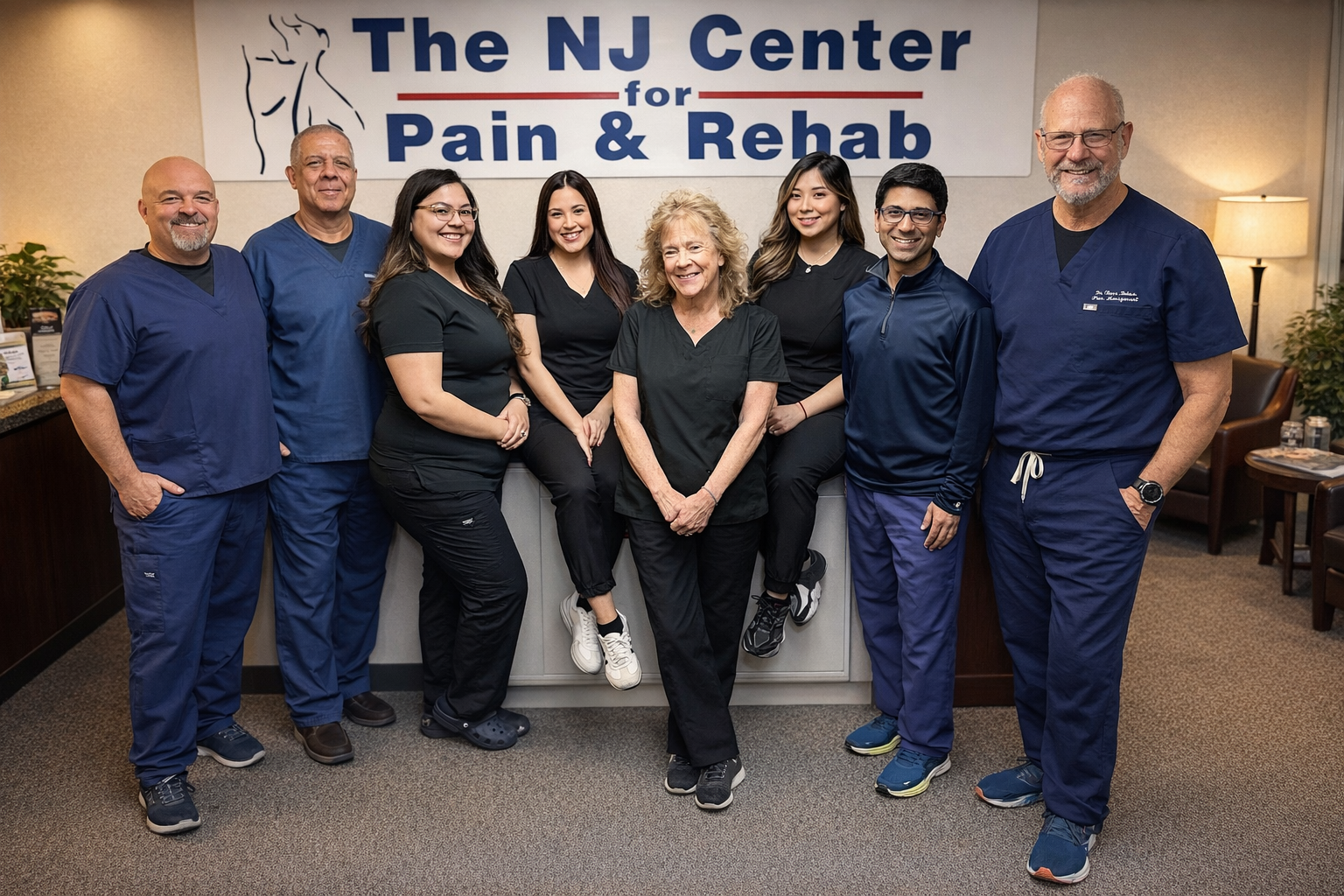
The New Jersey Center for Pain & Rehabilitation, LLC (NJCPR) is a patient centered Chiropractic and Pain Management facility dedicated to providing high quality care for those involved in personal and/or work related injuries. We use multiple modalities in the art of Chiropractic Medicine and Pain Management Services to decrease pain and improve functionality in a personalized setting.
288 North Broad Street Elizabeth, New Jersey 07208
908-527-7926
info@njcpr.net
At NJ Center for Pain and Rehabilitation, we take a structured, multidisciplinary approach to pain management. Our focus is not just relief but restoring function, mobility, and long-term stability through precise diagnosis and coordinated care.
To deliver precise, evidence-based pain management that restores function, reduces suffering, and improves quality of life—without unnecessary intervention.
We combine interventional pain medicine, rehabilitation, and multidisciplinary care to address the root drivers of pain, not just symptoms. Every treatment plan is individualized, measurable, and outcome-focused.
Core principles:
1) Diagnosis before intervention
2) Minimally invasive, maximally effective care
3) Functional restoration over temporary relief
4) Continuity of care across all providers
To be the leading regional center for integrated pain management where patients receive coordinated, data-driven care across disciplines in a single system.
We aim to redefine how pain is treated by eliminating fragmentation between specialties and replacing it with a unified, protocol-driven approach that produces consistent, repeatable outcomes.
What this looks like in practice:
1) Seamless coordination between physicians, physical therapists, and chiropractors
2) Standardized treatment pathways with individualized adjustments
3) Advanced interventional techniques supported by rehabilitation
4) A reputation built on measurable patient outcomes, not volume
Each patient progresses through a structured care pathway designed to:
Stabilize pain
(reduce acute or chronic symptoms)
Restore mobility and strength
(target underlying dysfunction)
Rebuild functional capacity
(daily activities, work, lifestyle)
Maintain long-term outcomes
(prevent recurrence)
Operational goals:
1) Reduce reliance on opioids and passive treatments
2) Minimize unnecessary procedures
3) Shorten recovery timelines through coordinated care
4 Improve long-term patient independence and quality of life